
In This Guide
- 1 The Seki City Legacy: 800 Years of Blade-Making How samurai sword heritage — and a second tradition from Tsubame-Sanjo — produced the modern precision kitchen scissor.
- 2 What Makes Them Cut Better: Angles, Steel & Micro-Serrations Why a 30–40° edge angle changes everything — and how micro-serrations grip what smooth blades cannot.
- 3 Detachable Design, Kitchen Tasks & How to Choose Why the detachable structure is a food safety requirement — plus a task list, price guide, and care basics.
Note: As an Amazon Associate I earn from qualifying purchases. Prices are approximate and subject to change.
The Seki City Legacy: 800 Years of Blade-Making
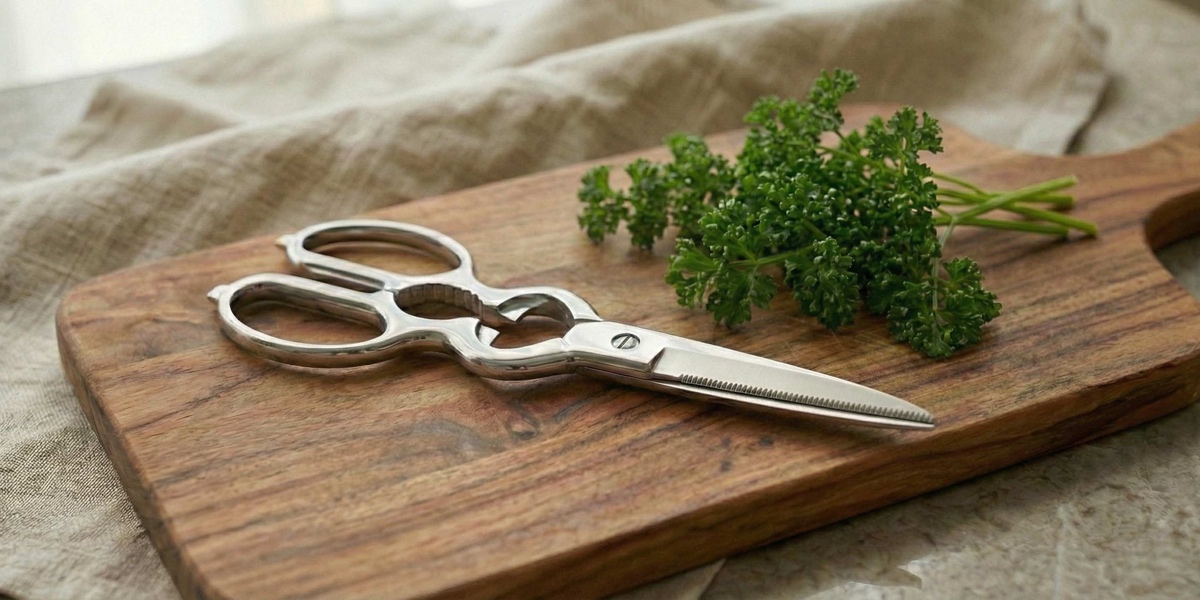
Seki City (関市) in Gifu Prefecture has been producing blades for more than 800 years. The city's knife-making tradition began with samurai sword production, when local river sand for quenching and proximity to charcoal-producing forests made it ideal for blade work. The same logic — precise heat, precise cooling, skilled hands — that produced the katana still governs kitchen scissor production in the workshops there today.
Companies like Kai (established 1908) and Shun emerged from this tradition. They didn't adapt their methods to fit scissors — they extended existing blade-making knowledge into a new form factor. The result is scissors engineered from first principles, where blade angle, steel selection, and forging method are chosen for performance.
Two Cities, One Cutting Tool
Seki explains the blade. Tsubame-Sanjo (燕三条) in Niigata Prefecture explains everything else.
While Seki built its reputation on the edge, Tsubame-Sanjo built its on metal forming, polishing, and assembly precision. The region has produced hardware and precision metalwork since the Edo period, with manufacturing tolerances among the tightest in Japan. When these two traditions converge in a premium kitchen scissor:
- Seki's contribution: The blade — steel selection, forging, heat treatment, and the edge angle that makes a Japanese scissor cut differently
- Tsubame-Sanjo's contribution: The instrument as a whole — the pivot that maintains consistent blade pressure over thousands of cuts, the handle geometry, and the detachable mechanism that separates and reassembles with true precision
Neither tradition alone produces the same result.
Stamped (Mass-Produced)
Process: Cut from flat sheet metal; edges machine-ground
Result: Thin, prone to flex; edge geometry degrades unevenly
Lifespan: 1–3 years of regular kitchen use
Hand-Forged (Japanese)
Process: Steel heated and shaped under pressure; edge hand-finished
Result: Rigid blades that hold alignment; edge geometry stays consistent through heavy use
Lifespan: 10–20+ years with professional sharpening
What Makes Them Cut Better: Angles, Steel & Micro-Serrations
Blade Angle: Why 30–40° Changes the Experience
Western kitchen scissors: Typically sharpened to a 40–50° total angle (20–25° per side). Durable, but requires proportionally more force to penetrate material.
Japanese kitchen scissors: Sharpened to 30–40° total angle (15–20° per side). The narrower geometry concentrates cutting force onto a smaller surface area — the blade divides material rather than pushing it apart.
Why Sharper Angles Work
A sharper blade concentrates the same applied grip force over a smaller contact area, generating higher pressure at the cutting point. A 30° blade creates roughly 40% more cutting pressure at the edge than a 50° blade under identical grip force.
On chicken skin, cartilage, fish backbone, or herb stems, the difference is immediate and tactile: the scissors move through the material rather than into it. For a cook breaking down a whole chicken daily, this translates directly to reduced hand fatigue over years of use.
420J2 Steel: Hardness and Toughness in Balance
Most Japanese kitchen scissors use 420J2 stainless steel, often with added vanadium or molybdenum in premium models. The choice is deliberate:
- Hardness: 55–58 HRC — holds a sharp edge through hundreds of cuts on bone and cartilage
- Toughness (靭性): Absorbs lateral stress without chipping — critical because every cut involves two blades crossing each other under load
- Corrosion resistance: Handles acidic food contact and daily washing without rusting
Cheap Western scissors often use soft stainless at 50–52 HRC. They dull fast and never feel truly sharp even when new.
⚠️ The Steel Specification Is Only Half the Story
420J2 defines the alloy's composition — not its performance. Japanese craftsmen control quenching temperatures and cooling rates with precision that determines whether the steel reaches its full hardness potential. The same 420J2, heat-treated in a Seki City workshop versus a commodity factory, produces blades with meaningfully different edge retention. What you're paying for in a Japanese-made scissor is the metallurgical judgment applied to the steel — not just the steel itself.
Micro-Serrations: Gripping What Smooth Blades Cannot
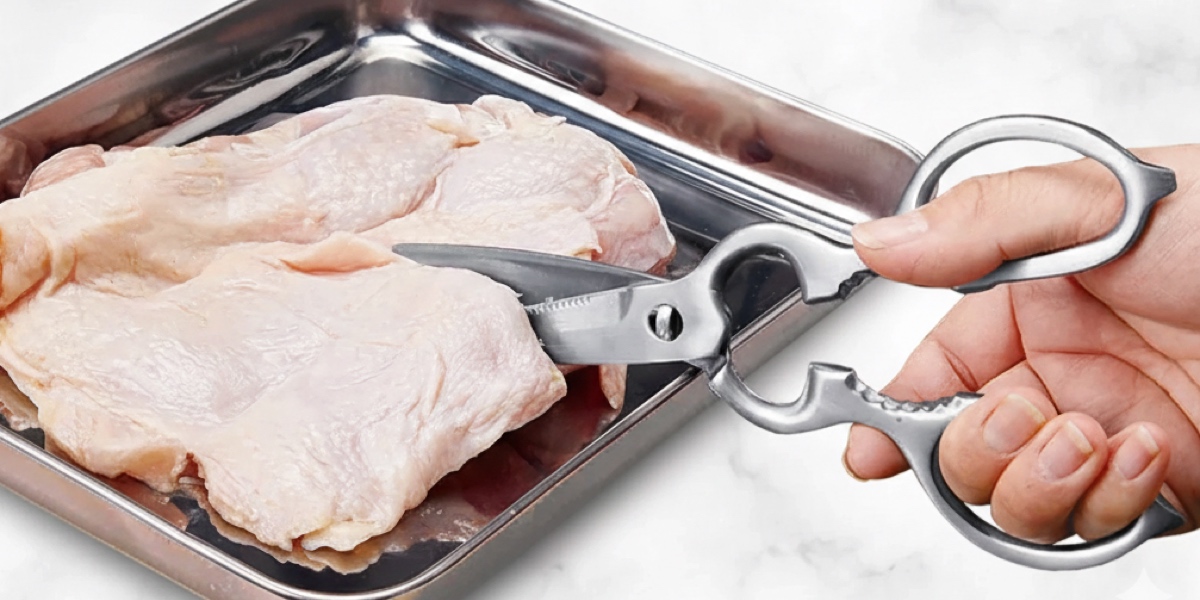
Many Japanese kitchen scissors carry micro-serrations — teeth so fine they're invisible to the naked eye, but physically significant at the scale of food fibers.
The problem they solve: certain materials resist smooth blades not because the blade is dull, but because the material is slippery. Chicken skin, fish skin, wet herb stems — the blade rides across the surface rather than biting in, requiring you to reposition and squeeze harder on each pass. Micro-serrations create discrete anchor points that prevent the blade from deflecting before it penetrates. The first cut engages immediately rather than skating.
When Smooth Edges Are Correct
Not all Japanese kitchen scissors use micro-serrations — and this is intentional. For herbs, delicate fish, and anything where a bruise-free cut matters, a smooth convex edge produces cleaner results. Premium all-purpose scissors often use a smooth edge on the upper blade and micro-serrations on the lower, giving both cutting modes in one instrument.
Detachable Design, Kitchen Tasks & How to Choose
Detachable Design: A Food Safety Requirement
A detachable scissor blade is often listed as a "convenience feature." That undersells what it is.
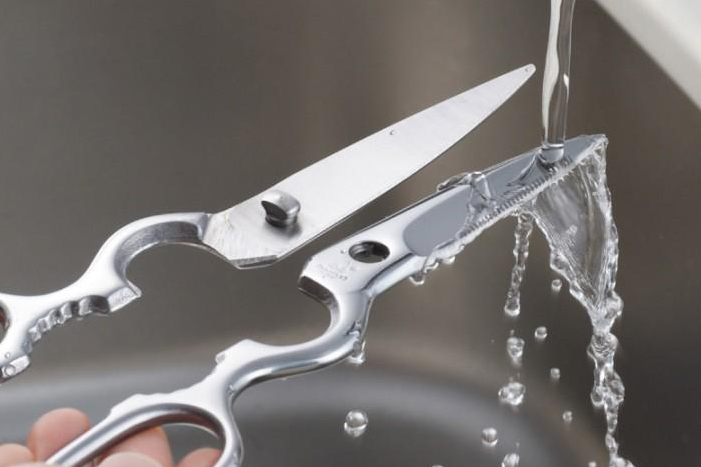
The pivot joint of a kitchen scissor used on raw protein is a hygiene problem that rinsing cannot solve. Raw chicken juices and fish proteins are forced into the gap between blades with every cut — the gap is narrow enough that water can't reliably flush it, but wide enough for bacteria to colonize. On a non-detachable scissor, this zone can never be fully cleaned.
A fully detachable scissor solves this structurally: both blades separate completely, exposing every surface — including the internal faces of the pivot joint — to washing and drying. No gap, no hidden surface, no structural reason for food material to remain. It reassembles to the same alignment and tension as before.
Detachable Design Requires Precision Manufacturing
A detachable scissor that reassembles with inconsistent blade alignment or varying tension is worse than a fixed one — inconsistent blade pressure produces uneven cuts and accelerates edge wear. The pivot hole, rivet diameter, and spring pressure must all hold tight tolerances so the scissor returns to identical performance after every disassembly. This is standard for a Tsubame-Sanjo workshop. It's not achievable by mass production at commodity cost.
What Japanese Kitchen Scissors Excel At
- Spatchcocking chicken: Cutting through backbone vertebrae — clean, controlled strokes that would need a cleaver and mallet with a knife
- Trimming fish fins and tails: Precise cuts close to the body in one movement
- Fresh herbs: Cutting with scissors eliminates the bruising that comes from rocking a blade through soft plant tissue
- Lobster and crab shells: Leverage and blade angle do the work your hands don't have to
- Portioning and prep: Dried pasta, green beans, scallion garnishes, parchment to pan size, vacuum-sealed packages
A bone notch near the pivot provides extra leverage for cutting through small joints without the full blade pressure that risks slipping. Offset handles keep knuckles clear of the cutting surface and allow downward cuts in a natural wrist position.
Price Guide
| Price Range | What You Get | Best For |
|---|---|---|
| $25–40 | Mid-tier Kai/Shun kitchen shears. Detachable, micro-serrated, good 420J2 steel. | Serious home cooks, regular meat and fish prep |
| $45–70 | Premium forged scissors (Kai 7000 series, Shun Multi-Purpose). Hand-finished. | Daily cooking, professional home kitchens |
| $70–100+ | Professional-grade (Toribe, Shimomura). All-stainless construction, lifetime tools. | Professional chefs, people using scissors 8+ hours/day |
Maintenance
Hand wash only. Dishwashers corrode the pivot and dull blades — even "dishwasher-safe" models last longer when hand-washed. Wash with warm soapy water, dry immediately after.
Oil the pivot. A drop of mineral oil every few months keeps the pivot smooth and prevents corrosion at the joint.
Professional sharpening. Once a year for heavy use, every 2–3 years for regular home cooking. Japanese scissors should be sharpened by someone who understands the blade angle — a general sharpening service may grind the geometry flat. Note: Kai offers lifetime honing on many of their scissors — mail them in and they sharpen and return for free.
The Bottom Line
Japanese kitchen scissors aren't just sharper — they're engineered with steeper blade angles, harder steel, and precision forging that Western mass production doesn't match.
For regular home cooking: A mid-tier Japanese scissor ($40–70) with a detachable blade, 420J2 steel, and micro-serrations handles every kitchen task cleanly for a decade or more. The cost per year of ownership is lower than replacing cheap scissors that bend and dull.
For professional or heavy daily use: A forged, hand-finished Seki City or Tsubame-Sanjo scissor at $70+ is the right specification. The construction outlasts any stamped alternative — and the ergonomics will matter after the tenth chicken of the day.
Our Recommendations
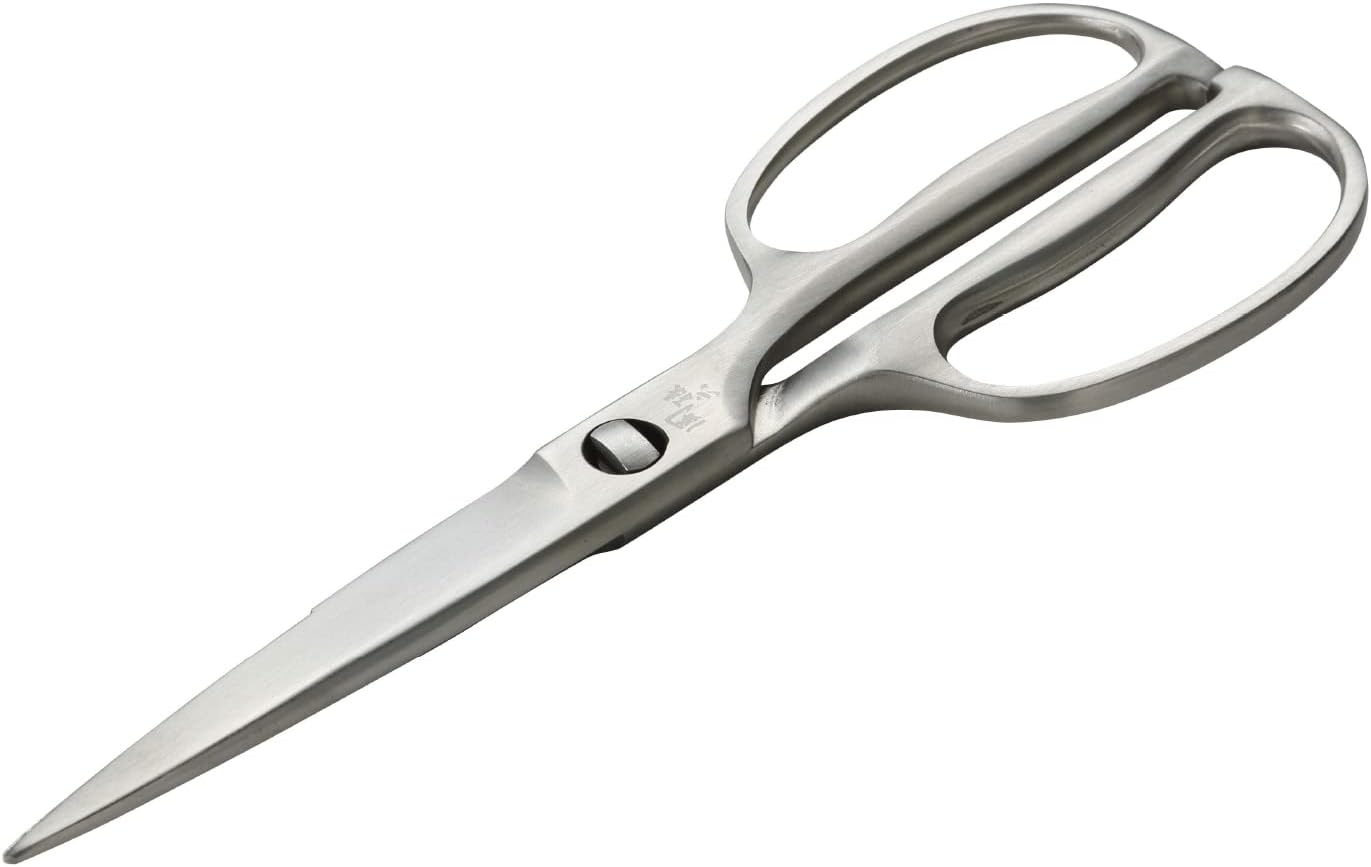
Kai DH3345 Seki Magoroku Kitchen Scissors
- Price~$40
- Steel420J2 Forged Stainless
- DesignDetachable Blades
The entry point into Seki City craftsmanship — forged blades from the same house that has made Seki knives since 1908. High-leverage handle geometry powers through bone and cartilage with controlled precision. At $40, the most accessible way to understand what the blade angle difference actually feels like on a whole chicken.
find it here →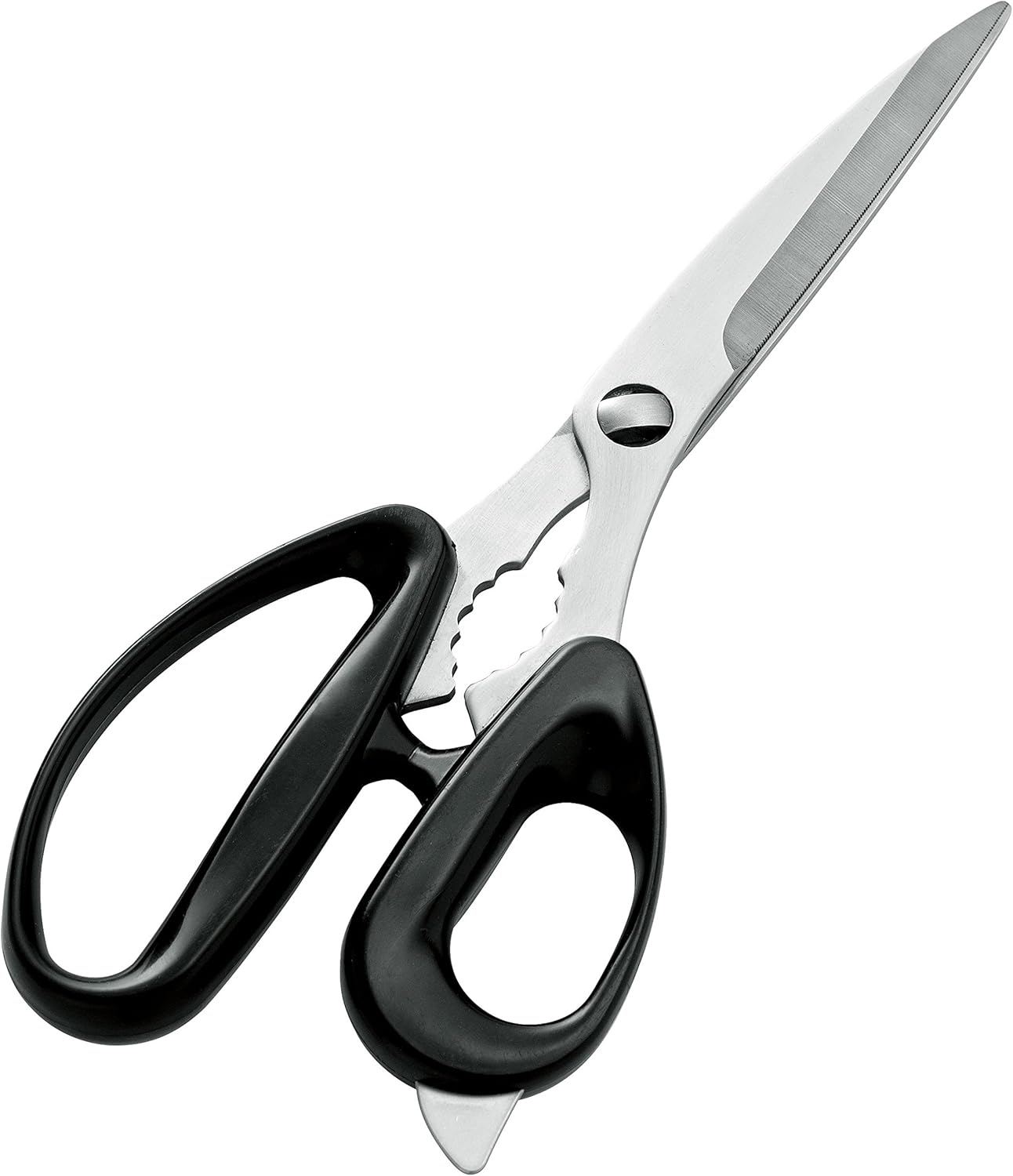
Shimomura PGS-10 Professional Cooking Scissors
- Price~$67
- DesignFully Detachable
- ExtraJar Opener, Bottle Cap Lever
Tsubame-Sanjo precision at a practical price. The detachable construction is the main reason to choose this — fully separable blades mean genuinely cleanable joints after raw protein work. The integrated jar opener and bottle cap lever are genuinely useful, not gimmicks. Built to the tight assembly tolerances that Tsubame-Sanjo is known for.
find it here →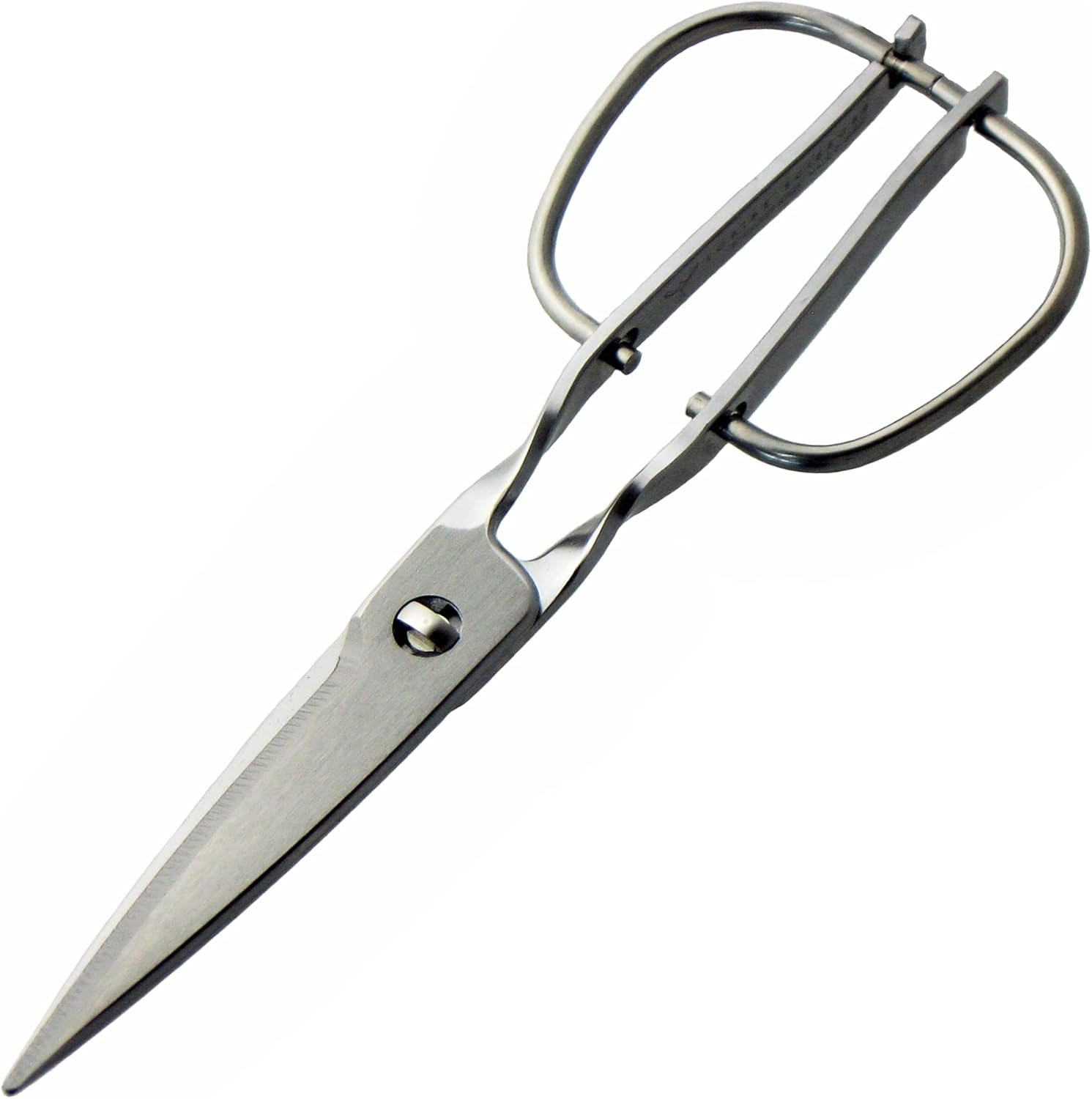
Toribe Seisakusho KS-203
- Price~$68
- ConstructionAll-Stainless, Fully Separable
- CleaningDishwasher Safe (separated)
The hygiene-first choice. All-stainless construction eliminates every crevice where food particles can hide — no plastic handle inserts, no material transitions, nothing that traps moisture. Separates completely for dishwasher cleaning. The correct scissors for anyone who cooks with raw fish or meat daily and takes food safety seriously.
find it here →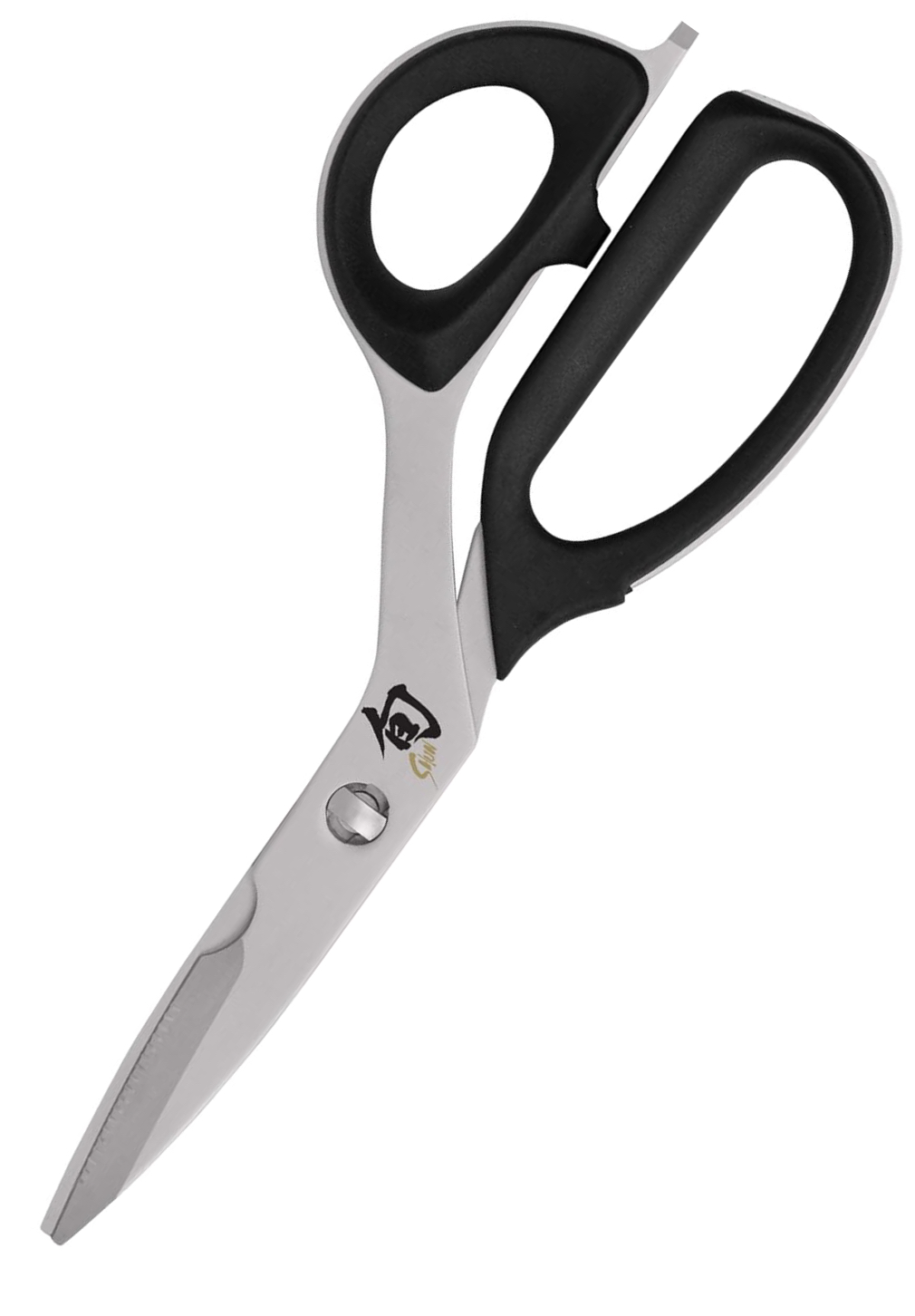
Shun Kitchen Shears (22.6 cm)
- Price~$72
- Steel420J2 Forged Stainless
- DesignFully Detachable
For cooks who want their scissors to perform at the same level as their knives. 420J2 forged stainless at full hardness, with the blade geometry and finish quality consistent with Shun's knife line. If you already cook with Shun knives, this is the natural extension — the same standards, the same origin, the same edge philosophy applied to a scissor form factor.
find it here →