
In This Guide
- 1 Keshousui: Not a Toner, a Foundation Why Japanese skincare hydrates first — and why using keshousui like a Western toner means you're doing it wrong.
- 2 The Size Problem: Why Most Hyaluronic Acid Stays on the Surface Why standard HA can't actually get into your skin — and how Hada Labo's four-size system solves that.
- 3 Why Less Is More: No Fragrance, No Oil, No Alcohol How a pharmaceutical company's instinct to strip ingredients down produces a formula that works for almost every skin type.
Note: As an Amazon Associate I earn from qualifying purchases. Prices are approximate and subject to change.
Keshousui: Not a Toner, a Foundation
Wait — It's Not What You Think
In Western skincare, "toner" usually means an astringent: you swipe it on with a cotton pad after cleansing to remove whatever your cleanser missed. It's a cleanup step. Many contain alcohol or witch hazel. Some even sting a little.
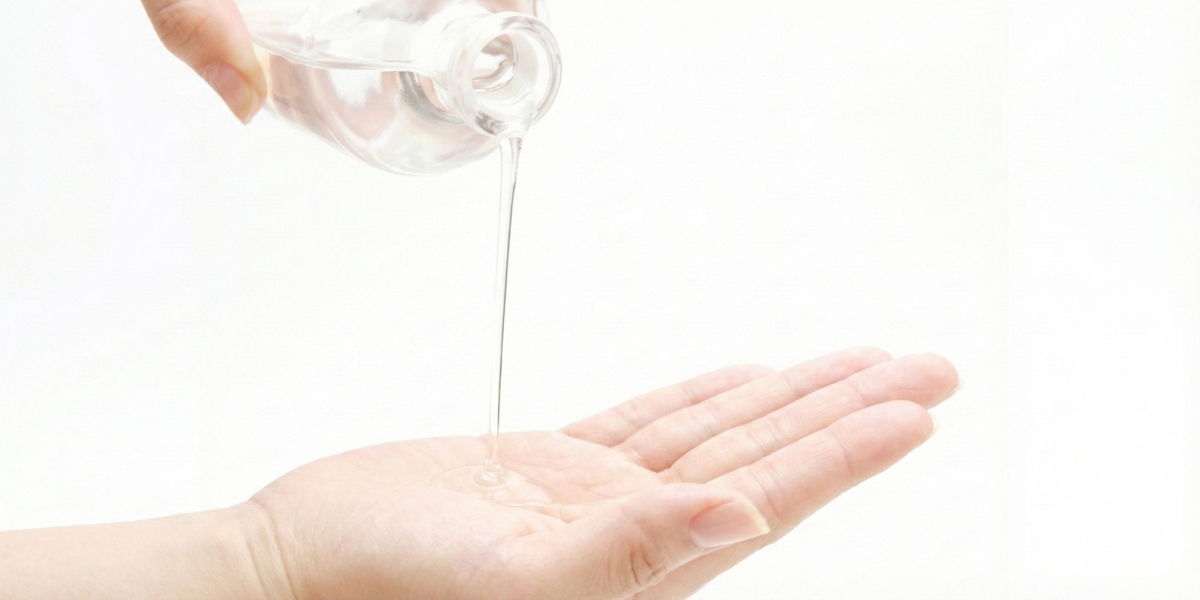
Keshousui does the opposite. You press it into slightly damp skin within 30–60 seconds of cleansing — before the moisture from washing has time to evaporate. Its job isn't to remove anything. Its job is to put water into your skin as the very first layer of your routine.
| Property | Western Toner | Japanese Keshousui |
|---|---|---|
| Purpose | Remove residue, balance pH | Add moisture as the first layer |
| Key ingredients | Alcohol, witch hazel, acids | Hyaluronic acid, glycerin, water |
| How to apply | Cotton pad, wiping motion | Palms, pressing motion onto damp skin |
| Skin state | Dry is fine | Slightly damp — essential, not optional |
| Role in routine | Cleanup step | Foundation — everything else builds on this |
Why Hydration Comes First
Japanese skincare philosophy is built on one idea: moisture is the foundation, not an afterthought. Before serums, before actives, before retinol — you establish the moisture barrier first.
Why? Because active ingredients (retinol, acids, brightening serums) work better on well-hydrated skin. Dry, barrier-compromised skin absorbs them unevenly and gets irritated more easily. Properly hydrated skin processes them at the rate they were designed for. The keshousui step isn't a ritual — it's the precondition for everything that follows.
Why Hada Labo Specifically
Hada Labo (肌ラボ) is made by Rohto Pharmaceutical — a company founded in 1909 whose main business is eye drops. Medical-grade eye drops, the kind held to pharmaceutical sterility standards. When Rohto moved into skincare, they brought the same discipline: every ingredient must justify its presence, or it gets cut.
The result is a formula stripped to its functional minimum: water, humectants, hyaluronic acid at multiple sizes, preservative. Nothing added for scent, nothing added for marketing. It's the pharmaceutical approach to a drugstore product — and it's why Hada Labo is the bestselling keshousui in Japan.
The Size Problem: Why Most Hyaluronic Acid Stays on the Surface
HA Is Amazing — But There's a Catch
Hyaluronic acid is one of the best moisturizing ingredients that exists. One gram can bind up to six liters of water. Your body produces it naturally in connective tissue to keep skin plump and joints moving smoothly. As you age, you produce less — and skin gradually loses that elastic bounce.
So putting HA on your face sounds like a straightforward fix. Here's the problem: the standard version is enormous. A typical HA molecule weighs between 800,000 and 1,200,000 Daltons. Your skin's outer layer — the stratum corneum — can only let molecules smaller than about 500 Daltons pass through. Standard HA is roughly 2,000 times too big.
Applied to your face, it sits on top of the skin. It forms a film that traps surface moisture and makes skin look plumper — useful, but shallow. It never reaches the deeper layers where the real dehydration accumulates over years.
The Hada Labo Solution: Four Types, One Formula
Hada Labo's formula combines four distinct types of hyaluronic acid, each with a different molecular structure and function. Together, they address hydration at multiple levels simultaneously:
Think of It Like Camera Resolution
A single-size HA product is low-resolution: it hydrates one layer and leaves all others untouched. A four-size system is high-resolution: it delivers moisture to four depths at once.
This is why jumping from a standard HA product to Hada Labo isn't a subtle upgrade. They're doing structurally different things. One hydrates the surface. The other hydrates the whole stack.
How to Apply: The Hand-Press Method
The formula is only half the equation. Applied wrong, even the best keshousui underperforms. Skip the cotton pad — the Japanese hand-press method is specifically designed to maximize how much product actually gets in.
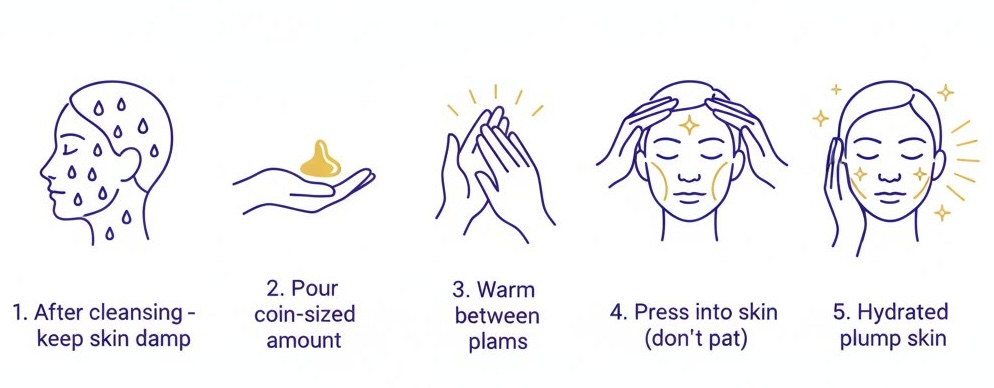
Step 1 — Apply on Damp Skin: The "30-Second Rule"
Apply within 30–60 seconds of cleansing while skin is still damp. Hyaluronic acid is a molecular sponge; it needs external water to bind to. On dry skin, it may pull moisture out of your dermis, causing a tightening sensation rather than hydration.
Step 2 — Dispense 2–3 Drops: Precision Over Quantity
Use only 2–3 drops. This specific amount creates the optimal hydraulic pressure needed for the molecules to migrate effectively through your skin layers without leaving a sticky residue.
Step 3 — Warm the Formula: Activating the Gel
Rub your palms together briefly. Gentle body heat reduces the viscosity of the keshousui, allowing it to flow more easily into the skin's surface channels.
Step 4 — Press, Don't Rub: Heat-Assisted Absorption
Cup your hands and press for 3–5 seconds per area. This "hand-press" technique uses pressure and warmth to assist deep penetration, whereas rubbing can disrupt the delicate moisture film.
Step 5 — The Mochi-Mochi Test: Verification
Gently press your cheek with your palm. Your skin should briefly "stick" to your hand and spring back—this is the mochi-hada (rice cake skin) effect. If it doesn't, apply one more layer.
Pro Tips
For very dry skin: Layer 2–3 times, waiting about 30 seconds between each application. Each layer allows the next one to reach slightly deeper.
To lock it in: Follow immediately with a light moisturizer or emulsion. This seals the surface HA film and keeps the hydration in place all day.
Why Less Is More: No Fragrance, No Oil, No Alcohol
Most moisturizers contain 20–40 ingredients: emulsifiers, fragrance, colorants, botanical extracts included more for their label appeal than their function. Hada Labo's standard formula contains fewer than ten. That's not a budget decision — it's a pharmaceutical one.
No Fragrance
Fragrance is the most common cause of contact dermatitis in skincare products. It's also the most opaque label declaration — "fragrance" can represent a single compound or a mixture of hundreds, many of them undisclosed. Repeated exposure to a sensitizing fragrance compound can trigger a delayed allergy that appears without warning after months of apparently fine use.
The argument for fragrance in skincare is purely sensory — it smells nice. The argument against it is clinical: added risk, zero added function. For a company that makes ophthalmic pharmaceuticals, where unnecessary ingredients simply aren't acceptable, cutting fragrance from skincare is obvious.
No Oil, No Alcohol
Oil-free means Hada Labo works for acne-prone and oily skin types that find most moisturizers too heavy or comedogenic. A water-based keshousui doesn't need oil to deliver aqueous humectants — it just adds complexity and incompatibility.
Alcohol is common in toners because it creates that cool, rapidly-evaporating "refreshing" sensation. It also degrades the skin's lipid barrier over repeated use — the exact barrier a keshousui is designed to strengthen. Including alcohol in a hydrating formula is self-defeating. Hada Labo cuts it.
The Muji Alternative: For Skin That Reacts to Everything
Muji's Sensitive Skin Lotion applies the same omission philosophy from an even more stripped-down starting point. Formulated with natural soft water from Iwate Prefecture, it's free from fragrance, colorants, mineral oil, alcohol, and parabens.
If your skin reacts to almost everything — occasionally even the minimal Hada Labo formula — Muji is the right starting point. Fewer ingredients, fewer variables. The keshousui for skin that has been overwhelmed by complexity.
The Bottom Line
Hada Labo is not a moisturizer. It is the first layer — the moisture foundation that Japanese skincare builds everything else on. The four-size HA system solves a real physics problem. The minimal formula is pharmaceutical discipline at drugstore pricing.
Start here: Gokujyun Moist (blue bottle) — four HA sizes, no fragrance, no oil. The reference formula for most people.
Upgrade to: Gokujyun Premium — seven HA layers including nano HA, for skin with chronic deep dehydration.
If you react to everything: Muji Sensitive Skin Lotion — maximum ingredient reduction, minimum irritation risk.
Our Recommendations
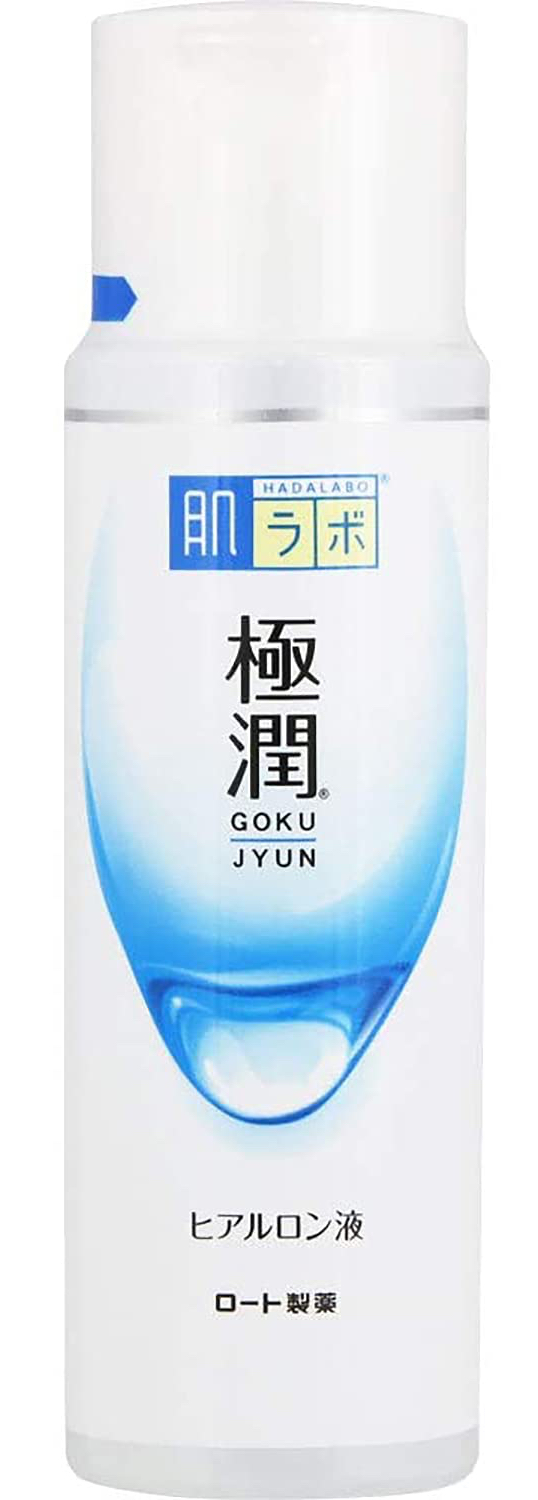
Hada Labo Gokujyun Hyaluronic Lotion Moist
- Price~$12
- HA Layers4 Molecular Weights
- FormulaFragrance-Free, Oil-Free, Alcohol-Free
The reference formulation. Four HA sizes covering surface to deep-layer hydration simultaneously — no fragrance, no oil, no alcohol. Start here. For most people, this is the only step needed.
find it here →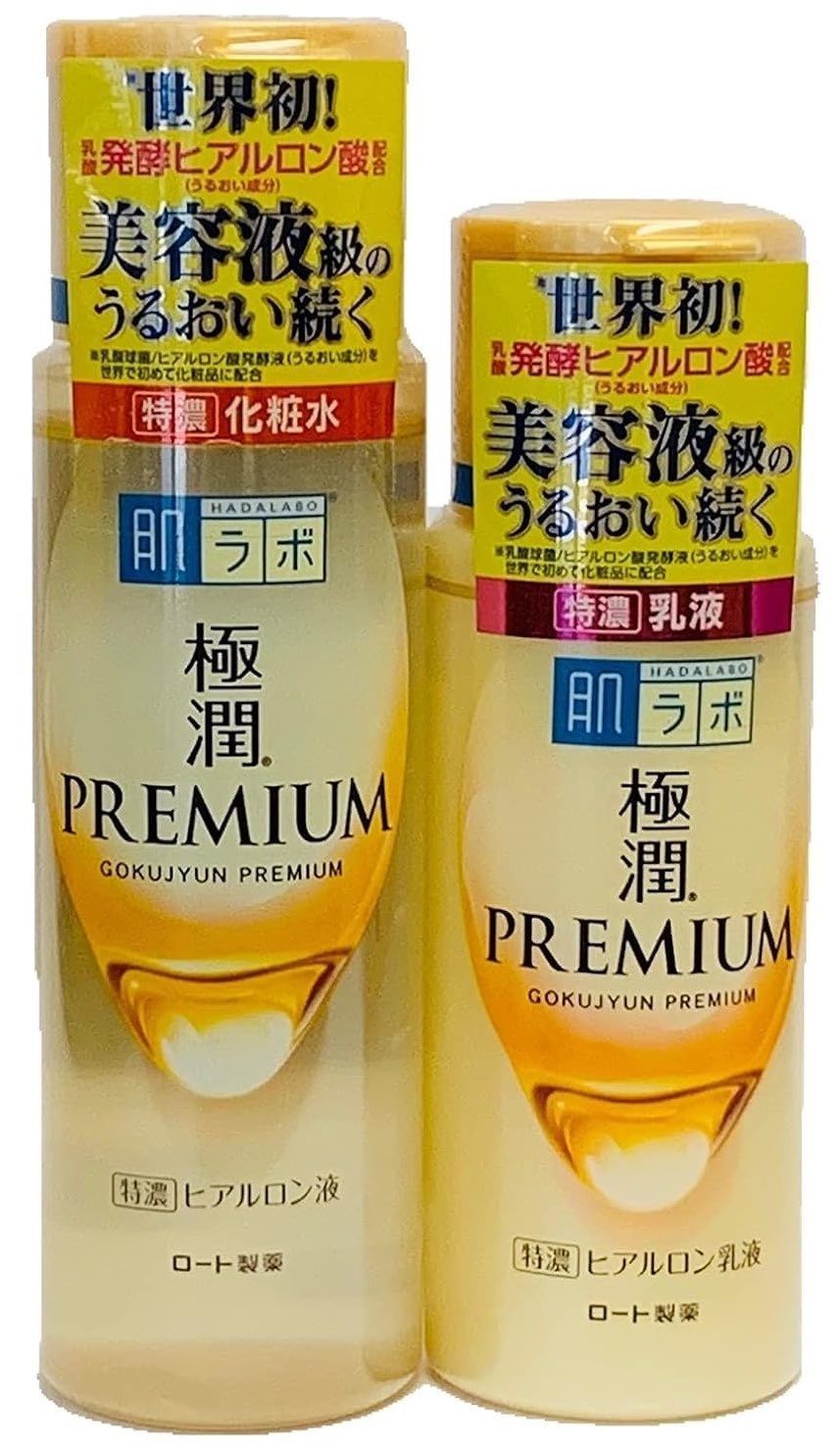
Hada Labo Gokujyun Premium Lotion & Milk Set
- Price~$28
- HA Layers7 Molecular Weights
- IncludesLotion + Milk
Seven HA layers including the nano fraction that reaches below the standard formula's depth range. For skin with chronic deep dehydration where the four-weight system doesn't fully deliver after a few weeks of consistent use.
find it here →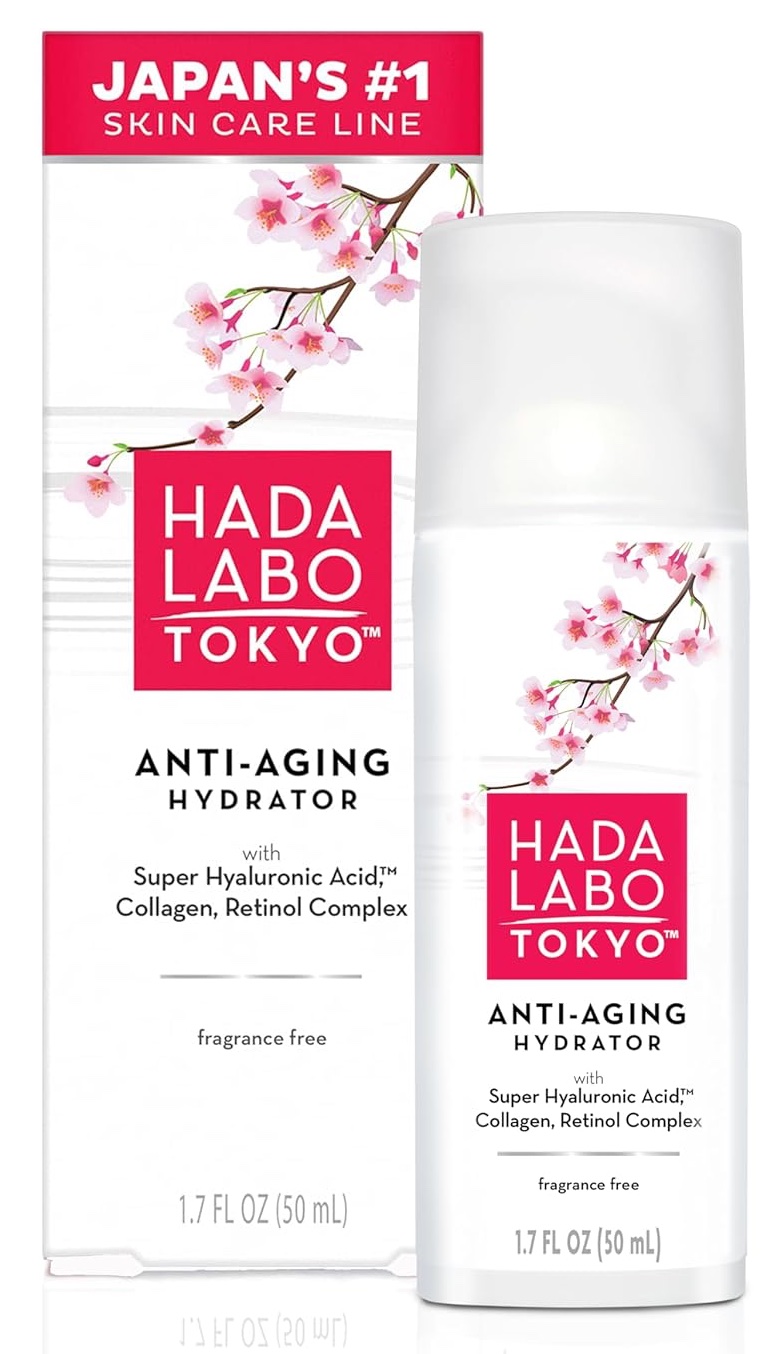
Hada Labo Tokyo Anti-Aging Hydrator
- Price~$12
- Active AdditionsRetinol + Collagen
- FormatKeshousui-weight
HA plus retinol and collagen in a single keshousui-weight formula. The right choice if you want to add anti-aging actives without adding a separate step to your routine.
find it here →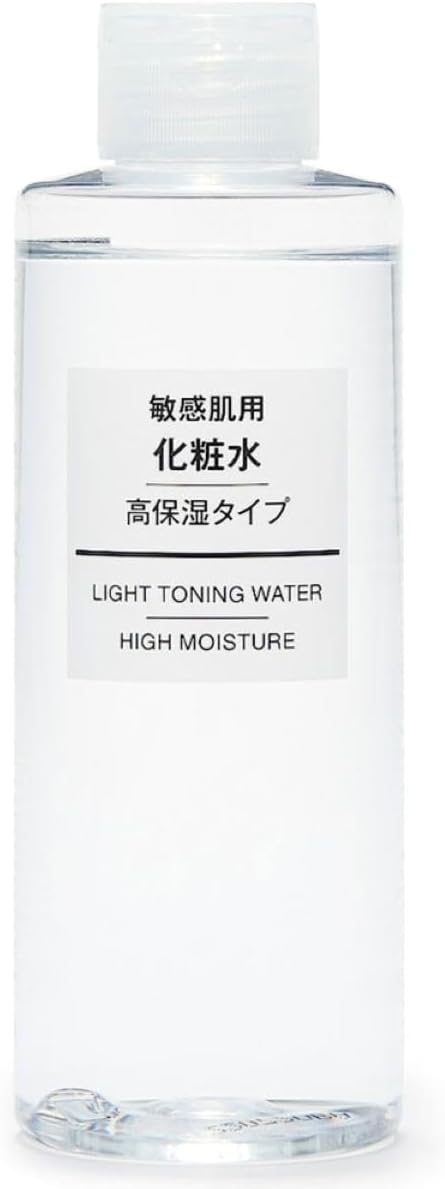
Muji Sensitive Skin Lotion - High Moisturizing
- Price~$35
- Water SourceIwate Natural Soft Water
- Free From5 Major Irritant Categories
Maximum ingredient reduction: free from fragrance, colorants, mineral oil, alcohol, and parabens. For skin that reacts to almost everything, this is the right starting point — fewer ingredients, fewer variables.
find it here →