
In This Guide
Note: As an Amazon Associate I earn from qualifying purchases. Prices are approximate and subject to change.
The Vibe Check: "Mochi-Mochi" vs. "Shakkiri"
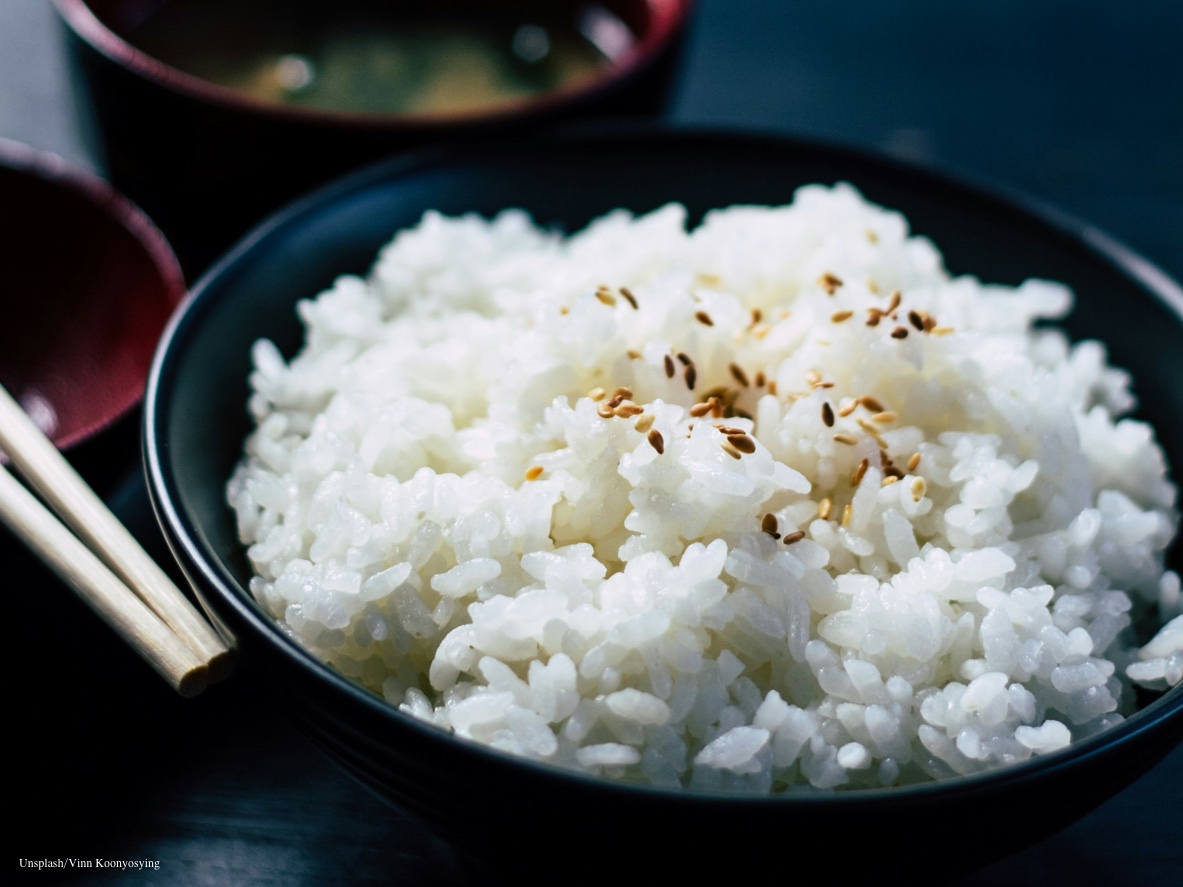
Japanese food culture has developed a precise sensory vocabulary for rice texture: mochi-mochi and shakkiri. These aren't just descriptions; they are the physical results of different heating philosophies.
Zojirushi: The "Mochi-Mochi" Specialist
The Feel: Soft, bouncy, and playful. Mochi-mochi describes rice that pushes back slightly against the teeth before yielding with an elastic sweetness.
Zojirushi: Convection Engineering for Uniformity
Zojirushi’s Pressure IH technology targets uniformity by raising the boiling point to 105°C and generating complex convection currents that keep every grain in consistent thermal contact. Guided by AI micro-adjustments, this system minimizes the variance between individual grains in a batch, resulting in a serving that is exceptionally consistent in texture, moisture content, and sweetness.
Tiger: The "Shakkiri" Master
The Feel: Clean, firm, and decisive. Shakkiri describes the distinct separation where you can feel every individual grain stand tall in the bowl.
Tiger: Far-Infrared Heat for Depth
Tiger’s premium series focuses on depth through the use of real ceramic clay pots (Donabe) that emit far-infrared radiation. This radiant heat penetrates the entire cross-section of each grain to heat it from the inside out, minimizing variance within each grain rather than between them. The result is optimal gelatinization and a quality of firmness and definition that persists even when the rice is fully cooked.
Lifestyle Matchmaking: Which One Are You?
Beyond the texture, these machines are engineered to fit very different daily rhythms and cooking habits.
The "Busy & Unpredictable" Household → Zojirushi
If family members eat at different times or you often leave rice in the pot for the next day, Zojirushi is unmatched. Their "Extreme Warmth" mode uses AI to micro-adjust heat for over 30 hours, actively preventing the rice from drying out or becoming hard.
The "Meal Prepper" → Tiger
If you prefer cooking in batches or just for one, Tiger offers a structural advantage. Their specialized "Frozen Rice" mode uses a modified cycle for perfect freeze-thaw recovery, while the "1 Cup Cook" mode ensures even a single serving (180ml) reaches restaurant-level quality every time.
| Property | Zojirushi — Mochi-Mochi | Tiger — Shakkiri |
|---|---|---|
| Daily Versatility | Winner: Best for rich sweetness, Sushi, Curry, and Rice Bowl. | Best for aromatic firmness, Fried Rice, Bento and Rice Ball. |
| Warmth Retention | Winner: 30+ Hours. Keeps rice fresh for over a day via AI. | 6–12 Hours. Optimized for fresh taste or immediate serving. |
| Meal Prep (Frozen) | Standard; quality may decline slightly after freezing. | Winner: Dedicated cycle locks in texture for reheating. |
| Small Portions | Adequate; engineered for optimal results at 2+ cups. | Winner: Precision mode for restaurant-grade single cups. |
| Pot Durability | Advanced non-stick coating (requires gentle handling). | Winner: Scratch-resistant natural ceramic (fragile if dropped). |
The 10-Year Reality: Maintenance & Durability
A quality rice cooker is a decade-long investment, but each brand handles the wear and tear of daily use differently.
Zojirushi Pot Durability
Uses multi-layer metal pots with high-tech non-stick coatings. While they offer incredible performance, they are vulnerable to scratches from abrasive sponges. Replacement pots typically range from $80 to $120.
Tiger Pot Durability
The ceramic clay pot is intrinsically hard and scratch-resistant, staying like new for years. However, it is fragile; dropping it can cause cracks. A replacement ceramic pot is a premium investment at $150 to $200.
The Bottom Line
As the Japanese saying goes: "Tiger for taste, Zojirushi for convenience."
Choose Zojirushi if your household eats at variable times across the day and you prefer rice with a sweeter, softer, more cohesive texture.
Choose Tiger if you eat rice fresh, frequently freeze portions for meal prep, cook for one or two people, or prefer rice with distinct grain separation.
Our Recommendations
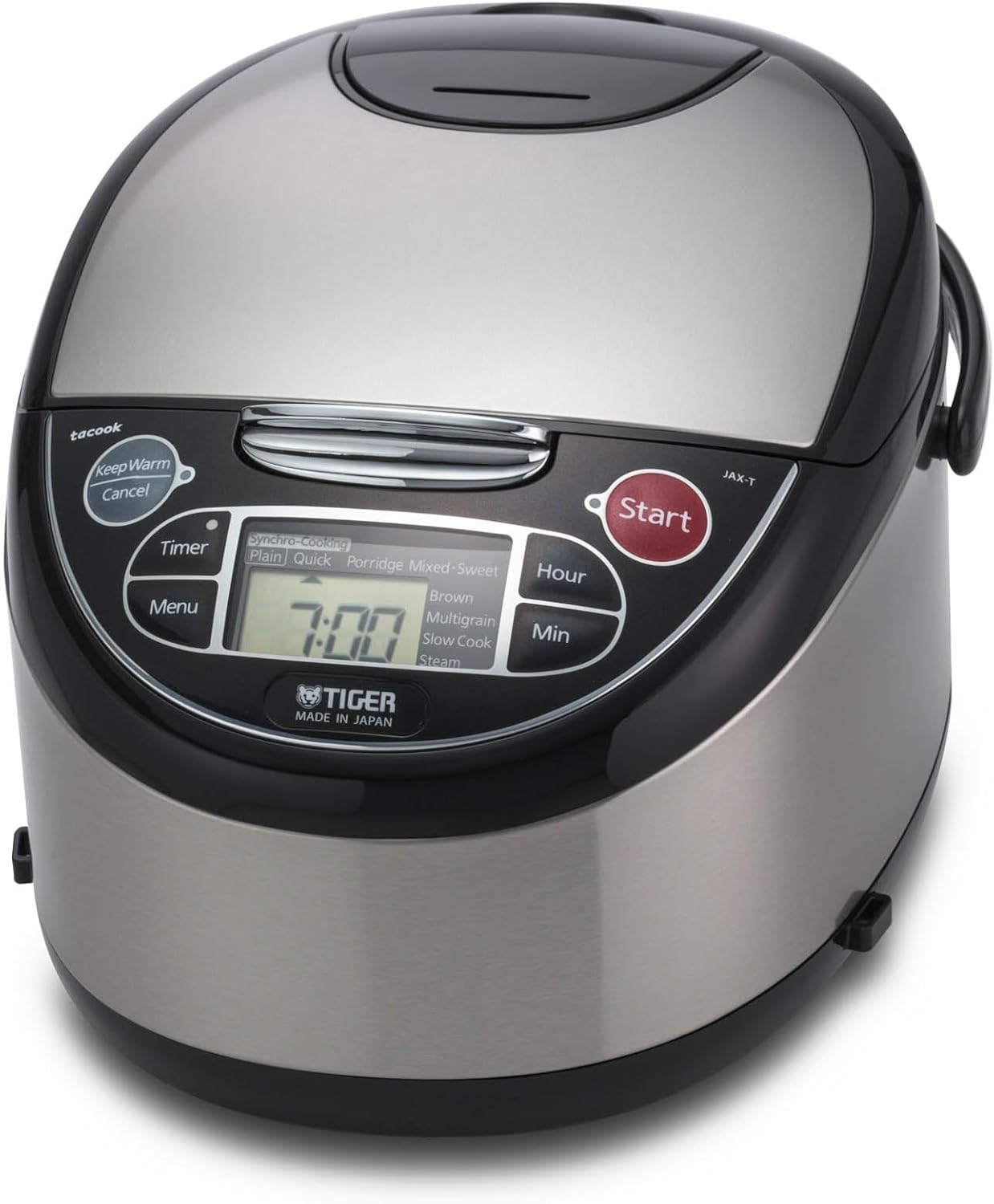
Tiger JAX-T10U-K
- Price~$185
- Capacity5.5 Cup (5–6 servings)
- TechnologyMicrocomputer + Tacook
The accessible entry into Tiger's cooking philosophy: microcomputer control with the Tacook syncro-cooking plate for simultaneous meal preparation. Shakkiri texture at a price point that justifies the brand comparison.
find it here →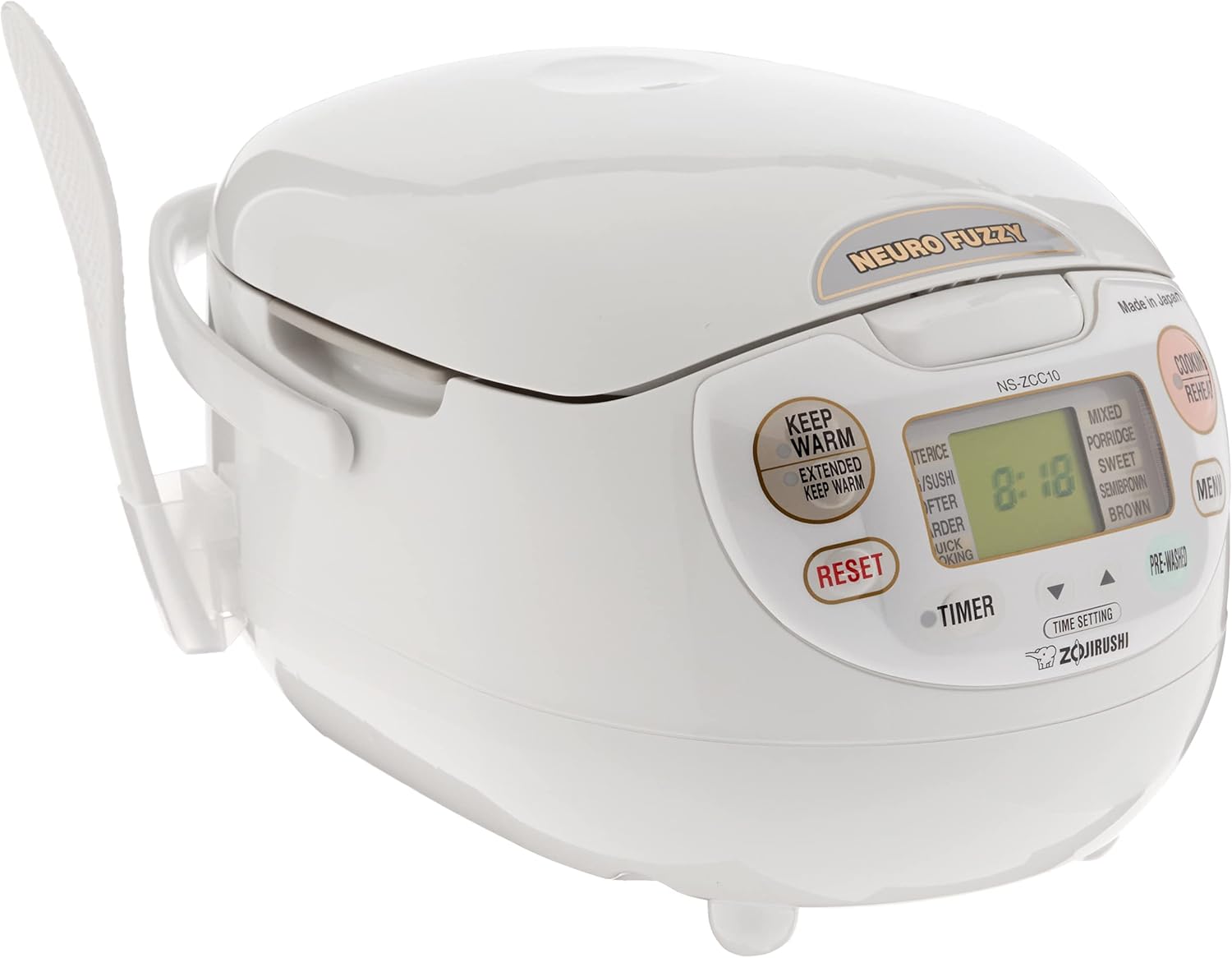
Zojirushi NS-ZCC10 Neuro Fuzzy
- Price~$242
- Capacity5.5 Cup (5–6 servings)
- TechnologyNeuro Fuzzy Logic
The classic Zojirushi proposition: Fuzzy Logic AI analyzes each cook and adjusts in real time, producing the consistent mochi-mochi result and 30+ hour warmth retention that defines the brand's reputation for busy households.
find it here →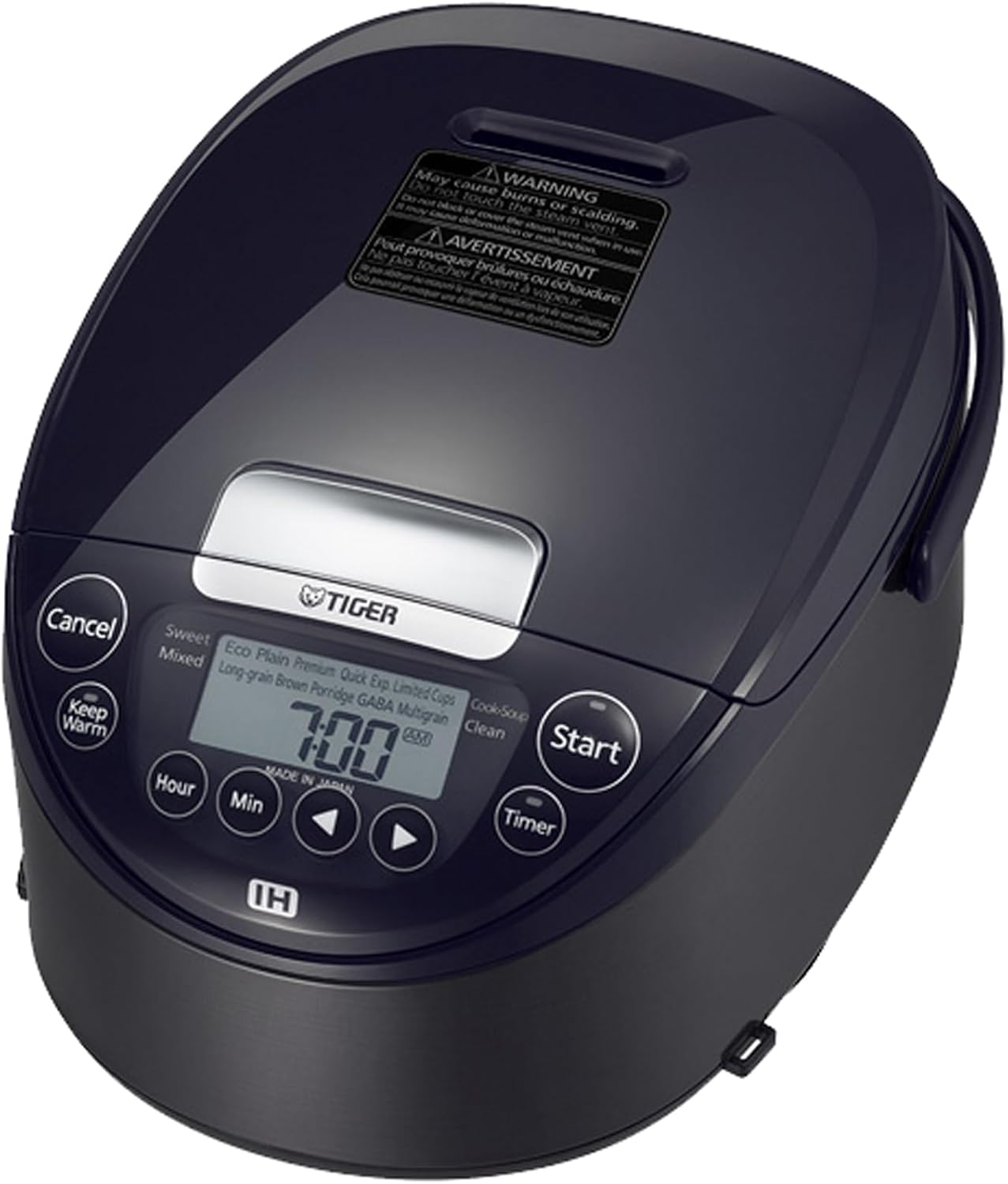
Tiger JPW-H10U
- Price~$300
- Capacity5.5 Cup (5–6 servings)
- TechnologyInduction Heating
Tiger's IH engineering applied to the full range of cooking modes—including dedicated frozen rice and single-portion performance. The model that converted the Japanese blogger who documented 10 years of Zojirushi use. Induction heating delivers Tiger's characteristic grain definition at higher consistency than microcomputer models.
find it here →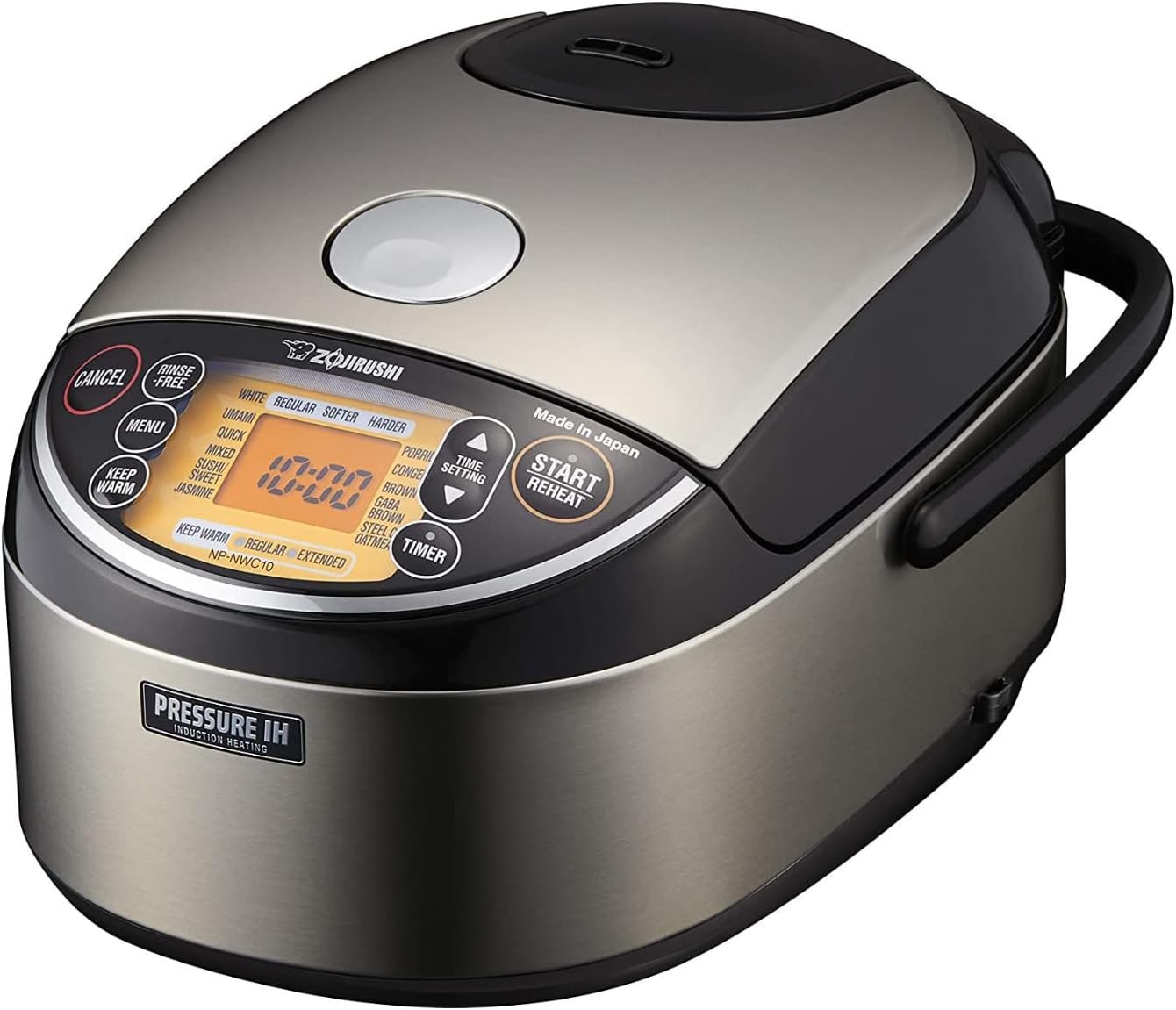
Zojirushi NP-NWC10XB Pressure IH
- Price~$460
- Capacity5.5 Cup (5–6 servings)
- TechnologyPressure IH + AI
The fullest expression of Zojirushi's engineering: pressure IH cooking with AI that learns and adapts across each use, multi-zone convection heating, and warmth management sophisticated enough to maintain rice quality for over a day. For households where the Zojirushi philosophy is a deliberate choice rather than a default.
find it here →